SoMe Stories
From Fishmonger to FishProf: How Roy Palmer built a brand at 74
 Sofia KetteFounder of SoMe, AdelaideLinkedIn· Interviewed 29 Sept 2026· Published 30 Oct 2026
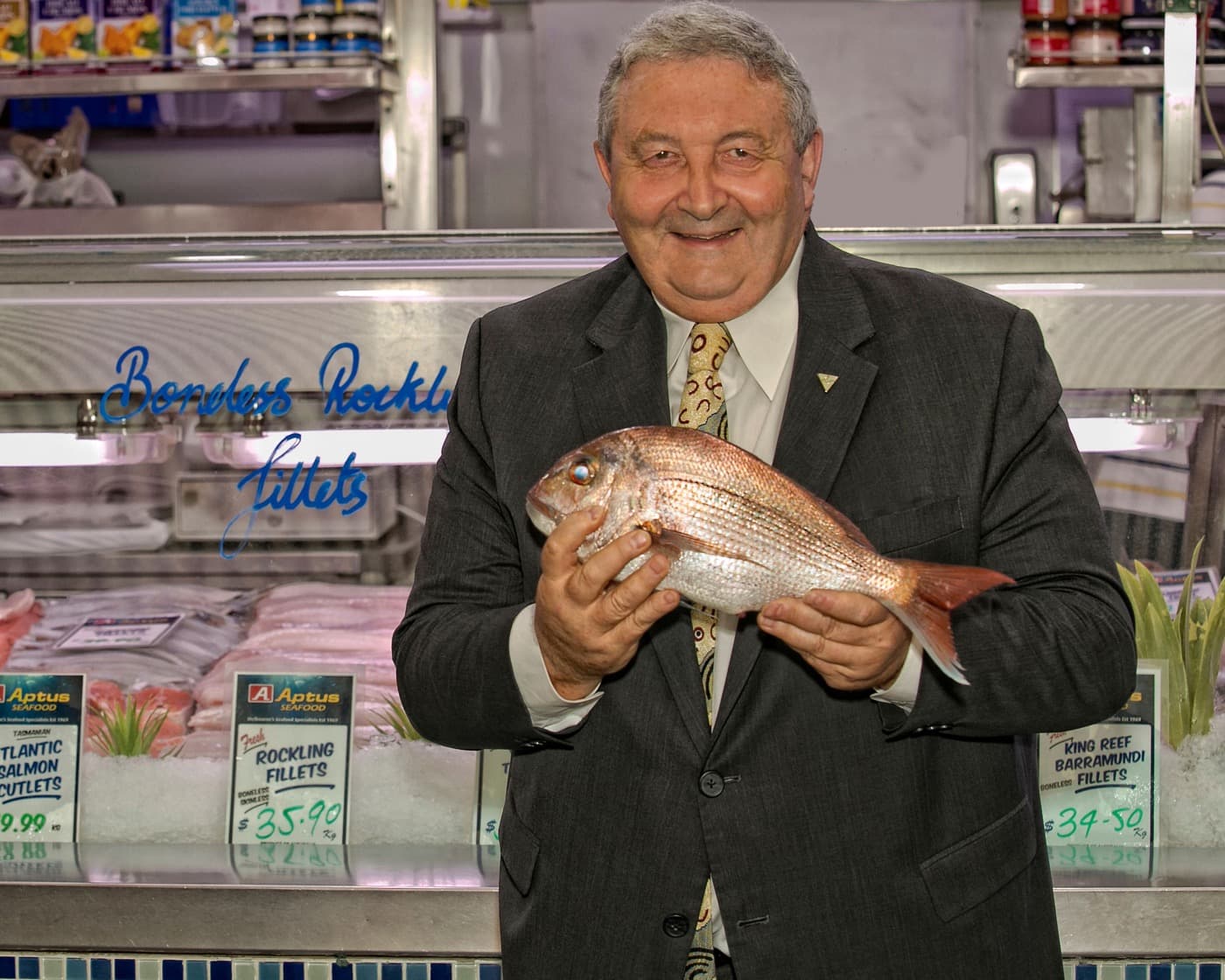
Roy Palmer was standing at South Melbourne Market, watching shoppers pay $10 a kilo more for New Zealand king salmon than for the Tasmanian salmon beside it.
He asked one woman why.
"Oh, because the New Zealand king salmon is wild," she said.
But it wasn't.
"It's farm salmon," he replied, "just like the Tasmanian salmon is."
But she thought she knew better so kept paying $10 more for fish based on her misconception.
After spending a life in the seafood industry, Roy now spends his days educating the public about what it is they are eating.
"Keep telling the truth and hopefully one day the penny drops."
He does this through his personal brand and being 'the FishProf' and through the Seafood Consumers Association.

Roy has 50+ years in post-harvest seafood. He created the Seafood Consumers Association to be the 'truth' storyteller, after working as a senior consumer behaviour expert for FAO on seafood fraud prevention. His book Sea of Deception is published November 2026.
How did Roy Palmer end up in seafood?
Roy was born in England and came over to Australia in 1972 as a ten-pound Pom where his first job was in seafood import/export.
Over time, he started writing in magazines about it under the moniker 'the Fishmonger'. The name stuck, but was not always taken seriously.
How did the Fishmonger become the FishProf?
Roy worked with a charity (Aquaculture Without Frontiers) and the Mexican government in 2017 to help create an oyster organisation in Tamaulipas. After seeing his work on this and assisting the Mexican government to increase seafood consumption, he was made an honorary professor at a Mexican university.
This sparked his rebrand from writing under the 'FishMonger' to the 'FishProf'. The FishProf got a face too! Roy commissioned "a cartoony sort of character" logo.
Tip 1: "Having the logo that connects it I think is quite important"
It gives it an identity.
Once he started writing as "the FishProf says" and "the FishProf thinks", he gained more credibility and authority in the space. "All of a sudden you become the FishProf and all of a sudden people going that's a good idea".
Tip 2: Use a title for authority
Around 2020, Roy got ill and handed his association to the other directors.
But that didn't stop him from doing other things and through it all, his brand gave him an 'extra zest'. At 74 while undergoing chemotherapy he started an MBA with the Australian Institute of Business, "Got to get my brain going because my body's sort of gone by its use by date."
On his MBA journey, he started the Seafood Consumers Association, a charity for consumers. And now he represents a "26 million people movement in Australia."
What has the FishProf brand done for Roy Palmer?
Through this association, Roy wrote to large companies and government to task when they appeared to be working against consumer interests. They generally communicate and take his message seriously.
"Wow, this is quite powerful," he said.
His personal brand has also given him opportunities such as being on the 7:30 report with the ABC. He now has a photo of him, the CEO on TV.
Tip 3: Make small media moments go further.
Through his personal brand journey, he has also written a book called 'Sea of Deception' coming out later this year which will only supercharge his brand in the future.
Where does Roy Palmer show up for his personal brand?
LinkedIn and Facebook are home. "My whole thing has been really about LinkedIn and Facebook," Roy told me. "I'm only dabbling in the others."
Tip 4: Pick one or two main platforms and do them well.
On LinkedIn he runs about a dozen groups and uses the platform to feed his writing. When he spots a relevant subject on Linkedin, he writes a blog around it and gives it "the consumer angle".
Tip 5: Build a community, not just a feed.
These blogs go on his website first, then out onto Linkedin, Instagram Threads and X. "I constantly put out a lot of stuff," he said. This also goes out in addition to his weekly newsletter and his new Substack.
Tip 6: Turn one idea into a blog, then share it everywhere.
He builds his brand beyond socials as well, where he has written for a few of the newspapers around Australia, especially with the Greek Community as they "have a big story within the seafood industry". This helps him get the message out.
Tip 7: Reach audiences your feed doesn't.
How does Roy Palmer use AI for his personal brand?
Roy is a firm believer that AI can be very helpful. "I reckon I could have two people working alongside me and they wouldn't get as much done as I get done with the AI."
He is careful though to not let it make things up or take over and uses it more to ask "have I missed any points?" than do the thinking for him.
Tip 8: Use AI as a checker, not the writer.
What is Roy Palmer's #1 piece of advice for building a personal brand?
"If you've got a personality or you've got a particular aspect of your life, whether it's a hobby or whether you're qualified in something, I think you should be encouraged to try and do that because it gives you a bit more focus."
"Just keep telling the truth and hopefully one day, the penny drops."
Further tips from Roy Palmer
- Don't post in anger. "You don't write in anger, you write with the important points that you've got."
- Stay honest. "Be honest and straightforward."
- Follow your own idea first. "Initially you've just got to follow your dream and your concept."
- Find what works for you. "You can't sort of have the hard and fast rule of this worked for me therefore it works for you."
 Sofia KetteFounder of SoMe, AdelaideLinkedIn
Know someone with a name worth knowing?
Nominate them, or yourself to share their personal brand story.